

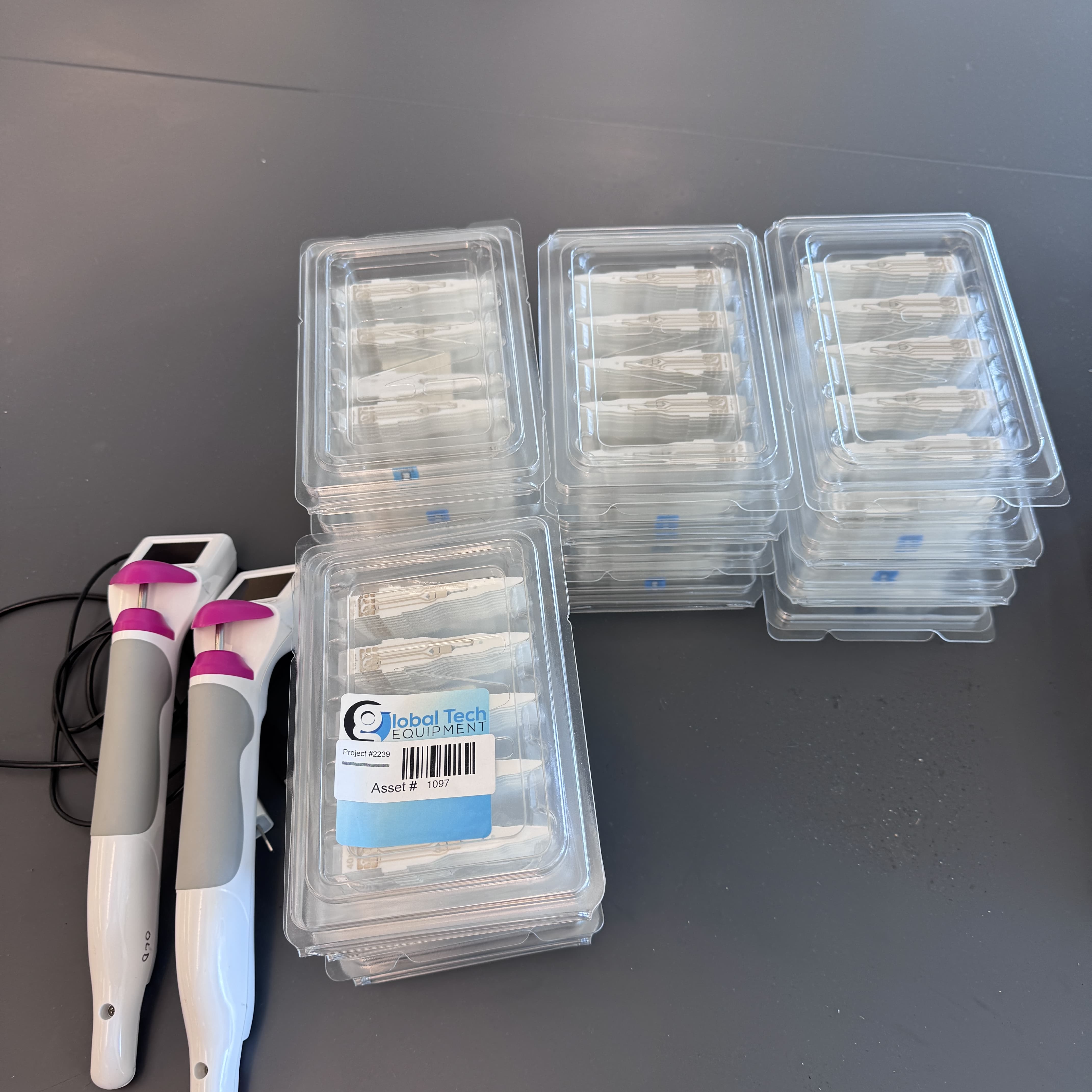
Millipore Scepter 手持式自动化细胞计数仪
产品名称: Millipore Scepter 手持式自动化细胞计数仪
英文名称: Lot of 2 Millipore Scepter Handheld automated cell counters, with supplies
产品编号: Millipore Scepter
产品价格: 2560
产品产地: 德国
品牌商标: Millipore Scepter
更新时间: 2026-05-14T16:15:58
使用范围: null
- 联系人 : 陈经理
- 地址 : 上海市浦东新区金桥开发区置业路111号3号楼
- 邮编 : 201299
- 所在区域 : 上海
- 电话 : 137****0200 点击查看
- 传真 : 点击查看
- 邮箱 : sales@yinzhisci.com
- 二维码 : 点击查看
The Millipore Scepter Handheld Automated Cell Counter represents a paradigm shift in routine cell culture quantification, offering a revolutionary blend of portability, speed, and precision that liberates researchers from the constraints of traditional hemocytometers and bulky benchtop analyzers. Developed by Merck Millipore (now part of the Merck Group), the Scepter is the world’s first handheld, battery-operated automated cell counter, designed specifically to bring cell counting directly to the cell culture hood or biosafety cabinet. This capability is arguably its most significant advantage; by allowing users to count cells without removing them from the sterile environment, the Scepter drastically reduces the risk of contamination associated with transporting open flasks or plates to a central analyzer. Its operation is elegantly simple yet technologically sophisticated: the user draws a small sample (typically 100 µL) of a cell suspension into a single-use, sterile sensor cartridge via a provided pipette tip, inserts the cartridge into the Scepter’s probe, and within 10 to 20 seconds, receives a comprehensive analysis directly on the high-resolution color LCD screen. This eliminates the need for manual grid counting, subjective cell viability assessment, and tedious cleanup, transforming a multi-step, error-prone process into a single, streamlined action.
At the heart of the Scepter’s analytical power is its use of Electrical Impedance Sensing, the same foundational technology employed by the world-renowned Beckman Coulter Multisizer. As cells suspended in a conductive buffer (provided in the kit) are pulled through a precise, sub-micron aperture within the sensor cartridge, an electric current is applied. Each time a cell passes through the aperture, it displaces its own volume of electrolyte, causing a transient change in electrical impedance (resistance). The Scepter measures these impedance pulses, and by analyzing their magnitude and quantity, it can accurately determine two critical parameters: cell concentration (cells/mL) and cell diameter (µm). The system automatically differentiates between viable and non-viable cells based on their size distribution, as dead cells and debris typically form a distinct population of smaller particles. The results are presented visually as a histogram plot of cell size versus count, alongside numerical data for total count, viable count, and average diameter. This method is highly robust, reagent-free (beyond the provided buffer), and provides objective, operator-independent data that is far more reproducible than manual counting, effectively eliminating inter-user variability.
The "Lot of 2" configuration mentioned in the query implies a significant opportunity for high-throughput labs or shared core facilities to double their counting capacity or create redundant systems for critical workflows. Each Scepter unit is powered by a rechargeable lithium-ion battery, providing the freedom to move seamlessly between multiple hoods, labs, or even satellite facilities without being tethered to a power outlet. A full charge typically supports hundreds of counts, and the included charging cradle ensures the device is always ready. The "with supplies" component is crucial for the immediate usability of these instruments; it typically includes a box of 50 or 100 sterile, disposable sensor cartridges, a bottle of the specialized isotonic counting buffer, a charging station, and a spare battery. The sensor cartridges are individually packaged and gamma-irradiated, ensuring sterility and making them safe for introduction into aseptic environments. This all-in-one nature means a laboratory acquiring this lot can unpack the devices and begin quantifying cell cultures within minutes, without the need for extensive calibration or additional purchases.
The applications for the Scepter are vast and central to any cell biology laboratory. It is the ideal tool for determining cell passage density, checking cell viability post-thaw, assessing transfection efficiency by counting GFP-positive cells (when combined with a fluorescent model, though the standard model is brightfield), and preparing cells for downstream applications like flow cytometry, cell sorting, or cryopreservation. Its speed—counting a sample in under 20 seconds—allows researchers to process multiple flasks or plates rapidly, making it perfect for high-content screening (HCS) setups or daily cell culture maintenance. Compared to image-based automated counters (like the Countess), the Scepter’s impedance method is less susceptible to interference from debris or cell clumps and does not require the use of Trypan Blue dye, which can be toxic to cells if left for extended periods. While the standard Scepter model provides size and concentration, it is important to note that it does not distinguish cell type or provide visual morphology; for that, the Scepter 2.0 or 3.0 models offer integrated fluorescence capabilities for more complex analyses. However, for the fundamental task of "how many cells do I have, and are they alive?", the original Scepter remains an unparalleled workhorse. Acquiring a pair of these devices, complete with consumables, represents an exceptional value for any lab seeking to modernize its cell quantification workflow with reliable, portable, and contamination-safe technology.
Key Technical Specifications (per unit):
|
Parameter |
Specification |
|---|---|
|
Product Name |
Millipore Scepter Handheld Automated Cell Counter |
|
Technology |
Electrical Impedance Sensing (Coulter Principle) |
|
Measurement Parameters |
Cell Concentration (cells/mL), Average Cell Diameter (µm), Viability (%) |
|
Sample Volume |
100 µL (recommended) |
|
Counting Time |
< 20 seconds per sample |
|
Cell Size Range Detected |
3 µm to 36 µm (diameter) |
|
Concentration Range |
5.0 x 10⁴ to 1.0 x 10⁷ cells/mL |
|
Data Display |
High-resolution color LCD screen (histogram & numerical data) |
|
Data Output |
USB port for data transfer to PC (CSV/Excel format) |
|
Power Source |
Rechargeable Lithium-Ion Battery (up to 8 hrs continuous use) |
|
Charging |
Included Charging Cradle / Docking Station |
|
Sterility |
Uses sterile, single-use sensor cartridges (gamma-irradiated) |
|
Supplies Included (Typical) |
Sensor Cartridges (qty varies), Counting Buffer, Charger, Spare Battery |
|
Dimensions (HxWxD) |
Approx. 24 x 7 x 5 cm (probe); 13 x 10 x 9 cm (charger) |
|
Weight |
Approx. 350 g (device only) |
|
Primary Applications |
Cell passage density, Viability post-thaw, Cryopreservation prep, Transfection checks |